
When Birth Takes a Different Path: Understanding C-Sections
by Megan Lorenz
May 2026
When last analyzed by the Minnesota state health department in 2021, Roseau County reported 146 births – and 40% of these babies came into the world by their moms having a surgical procedure, a Cesarean section. Often called a C-section, many families have heard of this procedure, but it's common to wonder, "Why would someone need a C-section?"
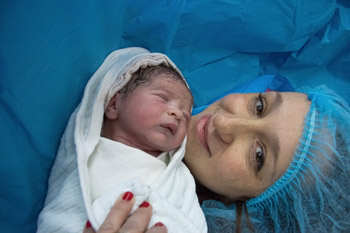
When it comes time for the baby's birthday, childbirth happens either through the birth canal or by C-section. In the birth canal method, the mother labors and pushes as the baby moves down and out of the womb. A C-section is a surgical method in which a doctor delivers the baby through an incision made in the mother's abdomen and womb.
 One reason a C-section
might be needed is due to the baby's position within
mother's womb. Most babies move into a head-down position
as they get ready to make their first appearance.
However, instead of head-first, some babies end up
feet-first or bottom-first, a position called "breech."
While many babies naturally turn head-down in the final
weeks – or even days – before
delivery, some do not. Doctors always check the baby's
position before birth, often using ultrasound that can
see the baby's position in a mom's womb. If baby is found
to be breech, discussions might include the possible need
for a C-section.
One reason a C-section
might be needed is due to the baby's position within
mother's womb. Most babies move into a head-down position
as they get ready to make their first appearance.
However, instead of head-first, some babies end up
feet-first or bottom-first, a position called "breech."
While many babies naturally turn head-down in the final
weeks – or even days – before
delivery, some do not. Doctors always check the baby's
position before birth, often using ultrasound that can
see the baby's position in a mom's womb. If baby is found
to be breech, discussions might include the possible need
for a C-section.
Although, position is one reason a C-section might be considered, there's a second reason: Surprise! There's not just one baby in mother's womb, there's two. If two babies are coming into the world, here again doctors consider the babies' positions and how they will be delivered at the same time. For example, one baby may be head-down while the other is not, potentially affecting the ability of both babies to be able come out of the birth canal. The babies may also be different sizes. If one twin is much larger than the other, it might influence how easy the babies can traverse the birth canal. In both those situations, sometimes a C-section is considered.
Finally, one of the most common reasons a C-section is sometimes considered is "failure to progress," or FTP. Research shows that across the United States, about one-third of C-sections are done for FTP. Usually, the womb's muscle contractions are the strong and rhythmic tightening of the muscles of the womb and help push the baby down and out. For a first-time mother, doctors consider FTP as being in labor for more than 20 hours without the baby moving further down and out of the birth canal. With FTP, no matter how long and hard those muscles work to get the baby out, the contractions are just unable to get the job done. In these cases, a C-section may be suggested to get the baby into the mother's arms at long last.
Labor is a good word for the birth process, especially fitting when the birth process is prolonged or baby's breech, or there's more than one baby. Understanding some of these reasons a C-section might be recommended can make the topic less surprising if it comes up during a prenatal visit or while labor is under way. For expecting parents or family members who want to know more, check in with your healthcare provider.
About the Author
 Megan Lorenz is a 4th year
medical student at the University of North Dakota School
of Medicine and Health Sciences. As a participant in
medical and community experiences offered in Roseau,
she's participating in the Targeted Rural Health
Education program that focuses on teaching student
doctors the importance of rural newspapers as a way to
share health information with their rural community. The
information is not for diagnosis or treatment and should
not be used in place of previous medical advice provided
by a licensed provider.
Megan Lorenz is a 4th year
medical student at the University of North Dakota School
of Medicine and Health Sciences. As a participant in
medical and community experiences offered in Roseau,
she's participating in the Targeted Rural Health
Education program that focuses on teaching student
doctors the importance of rural newspapers as a way to
share health information with their rural community. The
information is not for diagnosis or treatment and should
not be used in place of previous medical advice provided
by a licensed provider.